


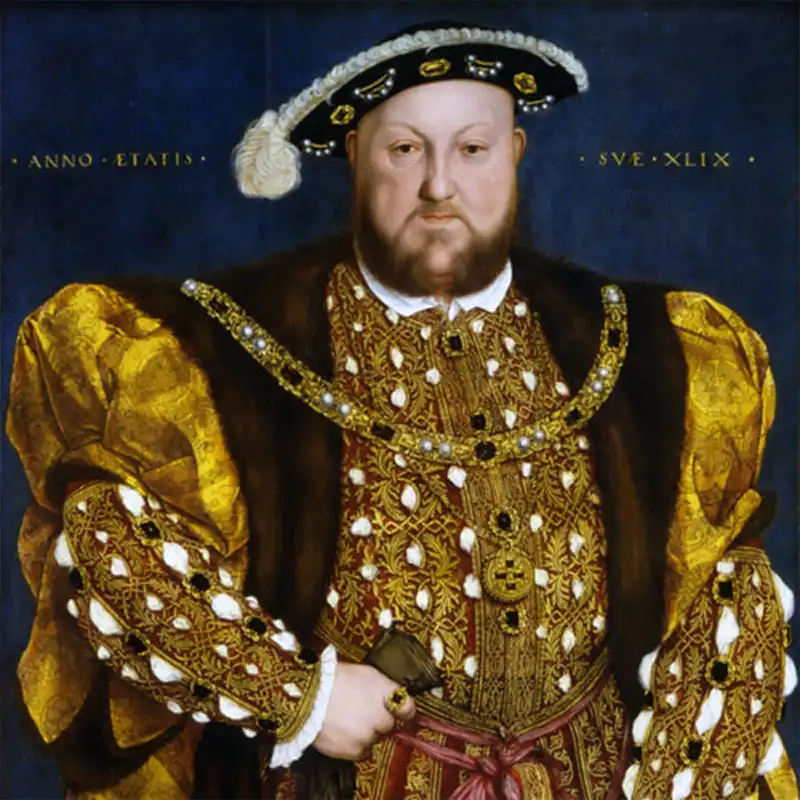
Henry VIII
Henry VIII (28 June 1491 – 28 January 1547)[e] was King of England from 22 April 1509 until his death in 1547. After the pope refused to annul his marriage to Catherine of Aragon, Henry passed legislation that severed England and Ireland from the Roman Catholic Church and established the monarch as Supreme Head of the Church of England, initiating the English Reformation. He subsequently married five more times; two marriages were annulled and two wives were executed.
Henry was born in Greenwich as the second son of Henry VII and Elizabeth of York. His elder brother, Arthur, Prince of Wales, was heir apparent until his death in 1502, after which Henry succeeded him. Originally intended for an ecclesiastical career, he instead received an education suited to kingship. Of his six siblings, only Margaret and Mary survived into adulthood.
Henry brought radical changes to the Constitution of England, expanding royal power and ushering in the theory of the divine right of kings in opposition to papal supremacy. He frequently used charges of treason and heresy to quell dissent, and those accused were often executed without a formal trial using bills of attainder. He achieved many of his political aims through his chief ministers, some of whom were banished or executed when they fell out of his favour. Thomas Wolsey, Thomas More, Thomas Cromwell, and Thomas Cranmer all figured prominently in his administration.
Appearing at: